An MVP becomes expensive when the team treats it as a small version of the whole business. The first version has a narrower job: let the right person attempt a real task so you can observe what happens.
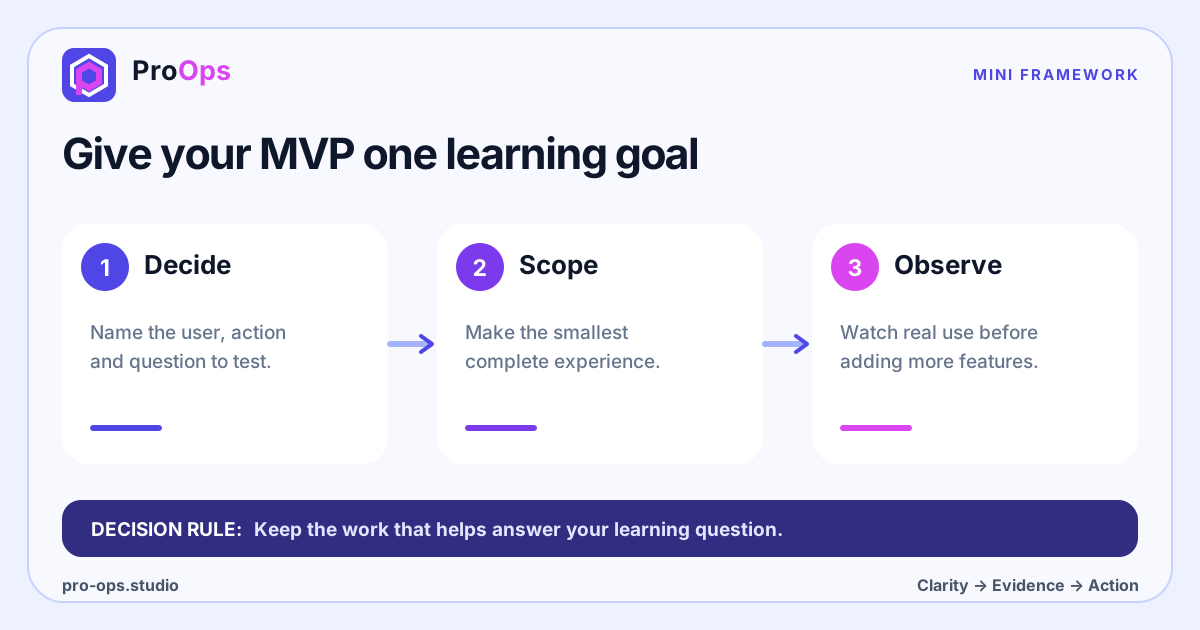
Start with the decision
Complete this sentence: “We need to learn whether [specific user] will [specific action] in [specific situation].”
If the sentence is vague, adding features will not fix it. Return to the customer, problem, and current workaround. A product test is useful only when you know what behavior would change your next decision.
Draw the smallest complete experience
Map the steps from the user’s trigger to their first useful result. Include only what makes that action possible and observable. You can handle onboarding, reminders, matching, or reporting manually if the manual work is reliable and does not distort the test.
Do not call a broken fragment an MVP. The experience still needs to let the person complete the core task. Small means focused, not unfinished.
Watch before improving
Put the experience in front of a few suitable users. Watch what they do without help. Record where they stop, what they ask, and whether they return. A request for more features may hide a problem with the main job.
Use the MVP Scope-Down Worksheet to make the learning goal and core action explicit before the build list grows again.