
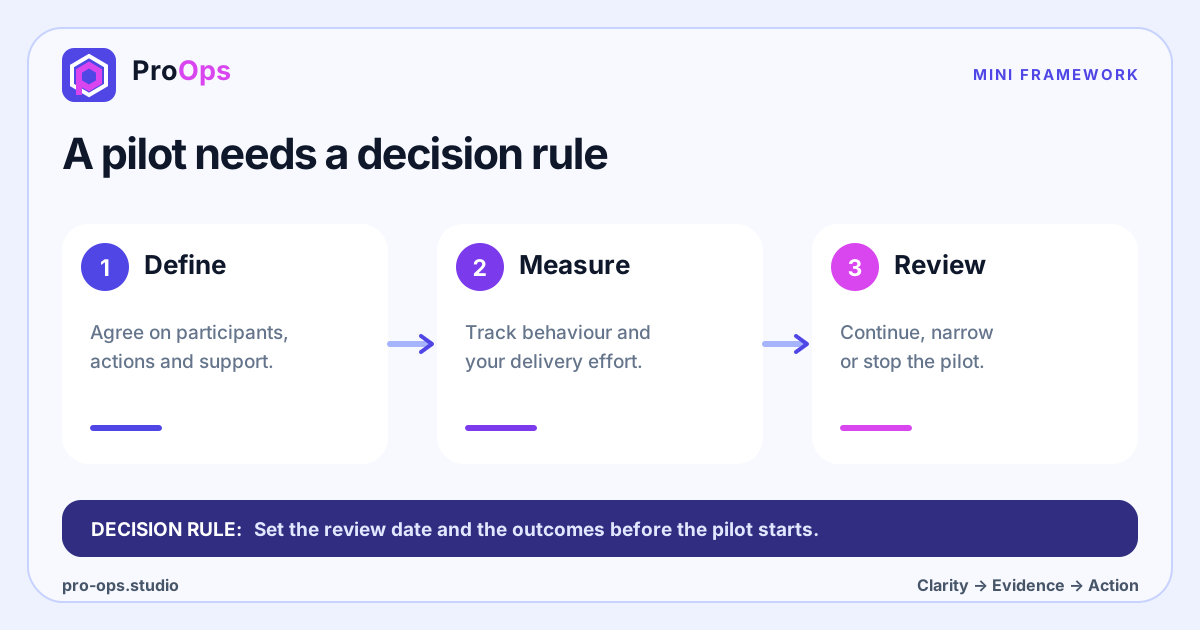
A pilot can produce activity without producing a decision. The team meets users, fixes issues, and adds features, then finishes without knowing whether the offer worked.
Agree on the test before delivery
Write down who the pilot is for, the situation that qualifies them, what they will receive, and what they will do. Specify the support you will provide. A high-touch pilot can be useful, but record the effort so you do not mistake heavy founder intervention for a self-serve product result.
Choose a small number of measures tied to behavior: activation, completion of the core task, repeat use, time saved, or willingness to pay. Page views and compliments are less informative if the pilot promise is about changing a workflow.
Set a review date and three outcomes
Before the first participant starts, decide what result means continue, narrow or change, or stop. State who makes that call and when. This prevents the team from extending the pilot because it feels busy.
If the result is mixed, look for a specific pattern: one customer type, trigger, or use case where people acted. A focused second pilot may be better than a broader launch.
Capture what surprised you
Ask participants what they did before the pilot, what they actually used, where they needed help, and what they would do without your support. Combine that with observed behavior and your own delivery time.
Use the Pilot Design Checklist to make the test clear to both participants and your team. A good pilot ends with a decision, even when the answer is to change direction.